Au măștile de protecție efecte dăunătoare asupra organismului uman?
Purtarea măștilor chirurgicale faciale se numără printre măsurile luate pentru atenuarea transmiterii bolii cu coronavirus (COVID-19) și reducerea deceselor.
Cu toții știm ca aerosolii din respirație sunt principala cale de transmitere a virusurilor, iar utilizarea pe scară largă a măștilor faciale scade capacitatea de răspândire a SARS-CoV-2 prin reducerea la minimum a inhalării de picături respiratorii de la indivizi contaminați asimptomatici sau de la persoanele care nu au manifestat încă simptome, împiedicând în același timp eliminarea particulelor respiratorii de către persoanele contaminate.
Această recomandare de utilizare a măștilor faciale a devenit contestată și chiar politizată în unele locuri, din cauza preocupărilor legate de siguranța măștilor, unele studii sugerând existența unor efecte medicale adverse nu numai asupra persoanelor bolnave, dar și asupra celor sănătoase. Mai exact, aceste studii au sugerat existența unor preocupări legate de hipercapnie (o afecțiune care rezultă din acumularea excesivă de dioxid de carbon în sânge) și hipoxie (o afecțiune care rezultă dintr-un nivel prea scăzut al oxigenului în sânge).
Detalii
de: Cristina Popa, Ana-Maria Bratu și Mioara Bercu
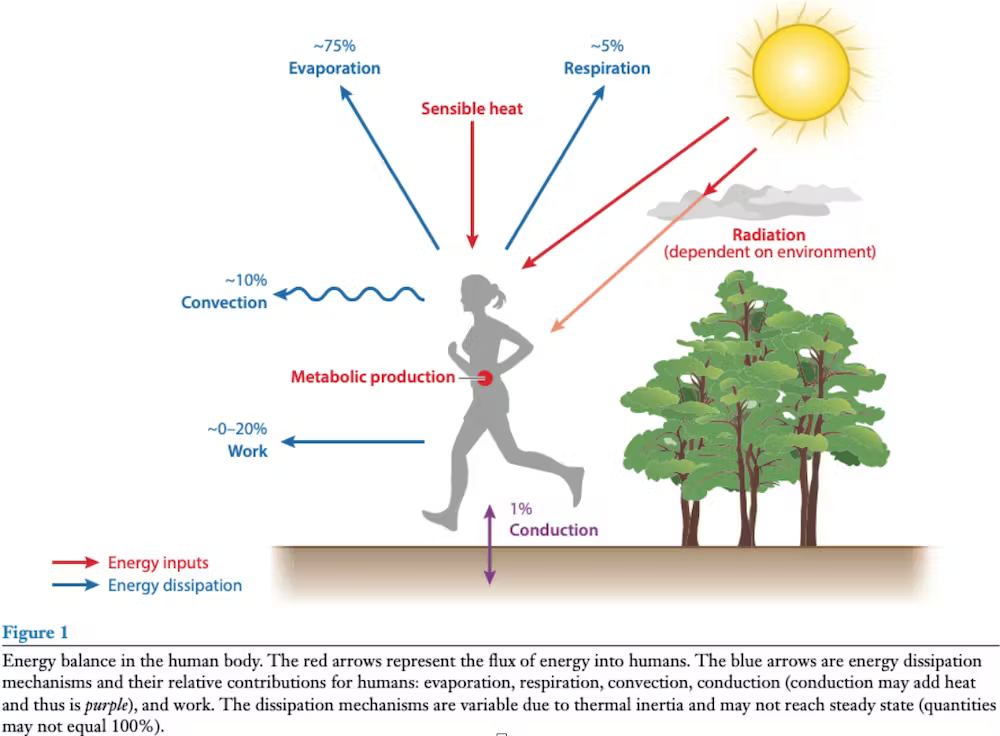
Not only people need to stay cool, especially in a summer of record-breaking heat waves. Many machines, including cellphones, data centers, cars and airplanes, become less efficient and degrade more quickly in extreme heat. Machines generate their own heat, too, which can make hot temperatures around them even hotter.
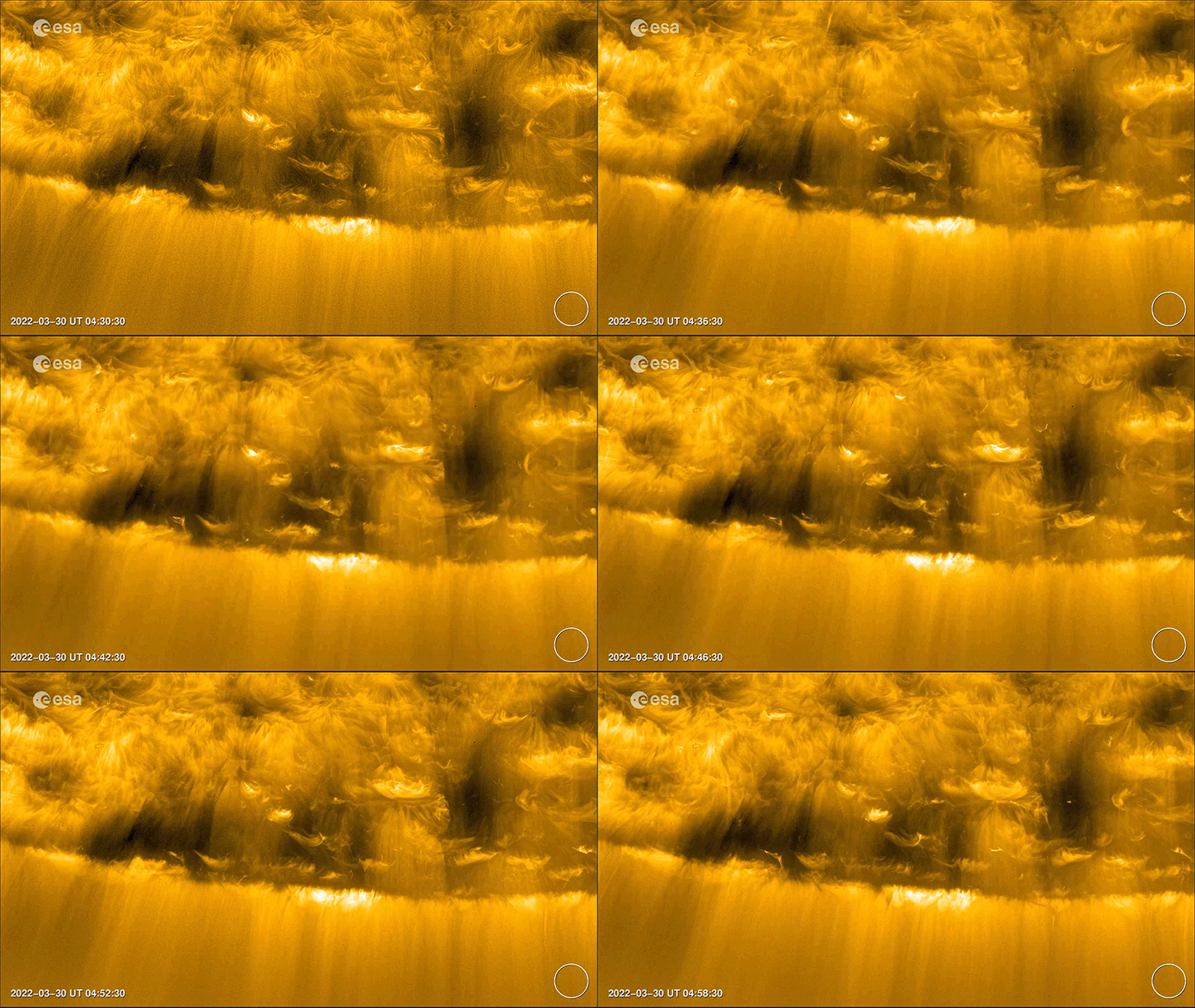
Mici jeturi de gaz supraîncălzit ar putea fi la baza vântului solar- fluxul de particule încărcate electric care se transmit în spațiu de la suprafața Soarelui.
Imaginile surprinse de nava spațială Solar Orbiter a Agenției Spațiale Europene arată „pico-erupții” solare (eng. picoflares) de scurtă durată, care par să expulzeze material în spațiu.
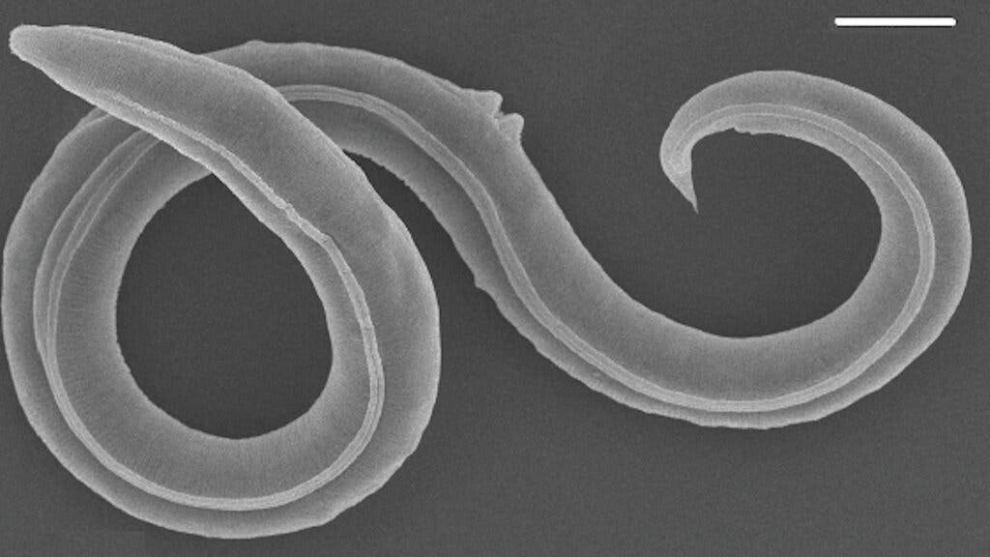
O imagine obținută cu un microscop electronic al unui vierme Panagrolaimus kolymaensis. Credit: Alexei V. Tchesunov and Anastasia Shatilovich/Institute of Physicochemical and Biological Problems in Soil Science RAS
Acum 46.000 de ani, pe când mamuții lânoși încă existau (specia este dispărută), o pereche de viermi cu dimensiunea de circa 1 mm au fost prinși și înghețați în permafrostul siberian.
Faptul incredibil este că acest tip de vierme are capacitatea de a reveni la viață după aceste zeci de mii de ani de suspendare a funcției vitale (această stare, care permite supraviețuirea în condiții de temperaturi scăzute extreme, se numește criptobioză).
While some people may be older in chronological age, their biological age might be much younger.
You likely know someone who seems to age slowly, appearing years younger than their birth date suggests. And you likely have seen the opposite – someone whose body and mind seem much more ravaged by time than others. Why do some people seem to glide though their golden years and others physiologically struggle in midlife?
I have worked in the field of aging for all of my scientific career, and I teach the cellular and molecular biology of aging at the University of Michigan. Aging research doesn’t tend to be about finding the one cure that fixes all that may ail you in old age. Instead, the last decade or two of work points to aging as a multi-factoral process – and no single intervention can stop it all.
The animal world is full of different types of intelligence, from the simple bodily coordination of jellyfish to the navigation abilities of bees, the complex songs of birds and the imaginative symbolic thought of humans.
In an article published today in Proceedings of the Royal Society B, we argue the evolution of all these kinds of animal intelligence has been shaped by just five major changes in the computational capacity of brains.
Each change was a major transitional point in the history of life that changed what types of intelligence could evolve.
La persoanele care au avut diabet zaharat de tip 2, administrarea celei mai ridicate doze testate a tratamentului a determinat reducerea masei corporale cu 17%, la 36 de săptămâni de la administrare. Niciun alt medicament nu a avut un efect atât de important asupra greutății la această categorie de pacienți. Dintre persoanele non-diabetice, retatrutida a redus masa corporală cu minim 30% la peste 25% dintre aceștia, cu minim 20% la peste 60% dintre aceștia și cu minim 15% la aproape 85% dintre participanții fără diabet zaharat de tip 2.
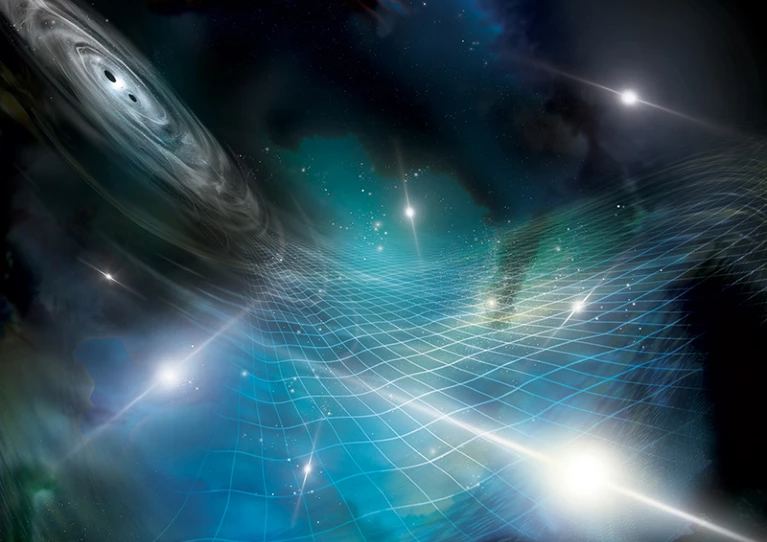
Unde gravitaționale - emise în urma coliziunii a două găuri super-masive (concepție artist). Credit: Aurore Simonnet for the NANOGrav Collaboration
După ce în 2015 cercetătorii de la Caltech, MIT și LIGO Scientific Collaboration au detectat pentru prima oară unde gravitaționale (rezultatul coliziunii a două găuri negre), una dintre predicțiile teoriei generale a relativității a lui Albert Einstein, recent patru echipe separate de cercetători (din SUA, Europa, Australia și China) au anunțat că dețin date solide cu privire la existența unor unde gravitaționale de dimensiuni galactice, care afectează dinamica structurii spațiu-timp a universului.
Ca de obicei, presa a prezentat subiectul într-o natură senzaționalistă, fără mare legătură cu descoperirea în sine. Deși informațiile privind aceste tipuri de unde gravitaționale sunt importante, suntem încă departe de momentul în care putem spune că trebuie să ne schimbăm teoria privind nașterea universului ori că progresele făcute modifică / cimentează anumite aspecte privind apariția universului în mod fundamental și definitiv.
Former US Private First Class Stephen Green was found guilty of raping and killing a 14-year-old girl and murdering her family in Mahmudiyah, Iraq in 2006. Four years later, US Corporal Jeremy Morlock was convicted of ambushing, murdering and maiming Afghan civilians in 2010.
Now our recent study, published in Military Psychology, has identified a personality profile linked with such war atrocities. It raises the question of whether military organisations could and should take more care when recruiting people.
The examples of moral transgressions from the global “war on terror” suggest there is a link between antisocial personality traits and breaches of battlefield ethics. This is backed up by scientific evidence, with psychological studies dating back to the aftermath of World War II.
The latest health trend on TikTok has been dubbed “nature’s own Ozempic”. It’s the herbal preparation berberine. Influencers have been enthusiastically claiming its success in helping them lose weight, with their posts viewed by millions.
But what actually is berberine? How is it related to the drug Ozempic? Does it help people lose weight? And is it safe?
Credit: Buzan and Huber (2020) Annual Review of Earth and Planetary Sciences, Author provided
This year, even before the northern hemisphere hot season began, temperature records were being shattered. Spain for instance saw temperatures in April (38.8°C) that would be out of the ordinary even at the peak of summer. South and south-east Asia in particular were hammered by a very persistent heatwave, and all-time record temperatures were experienced in countries such as Vietnam and Thailand (44°C and 45°C respectively). In Singapore, the more modest record was also broken, as temperatures hit 37°C. And in China, Shanghai just recorded its highest May temperature for over a century at 36.7°C.
Detalii
de: Alan Thomas Kennedy-Asser, Dann Mitchell and Eunice Lo
Îndepărtarea părului este realizată cel mai adesea din motive estetice, 40% dintre femei raportând că prezintă pilozitate nedorită. Dintre acestea, 10% au hirsutism (creșterea excesivă a părului pe diverse părți ale corpului. n.n.), adesea în contextul sindromului ovarelor polichistice.
Părul nedorit sau în proporții considerate excesive poate avea consecințe negative la nivel psihologic și asupra calității vieții, putând determina stres, depresie sau izolare socială. Din aceste motive, disponibilitatea unor metode sigure și eficace pe termen lung de îndepărtare a părului are o importanță ridicată. De asemenea, îndepărtarea pilozității pe termen lung și cu traumatizarea minimă a tegumentului este utilă în terapia afecțiunilor inflamatorii cutanate care implică foliculul pilos.
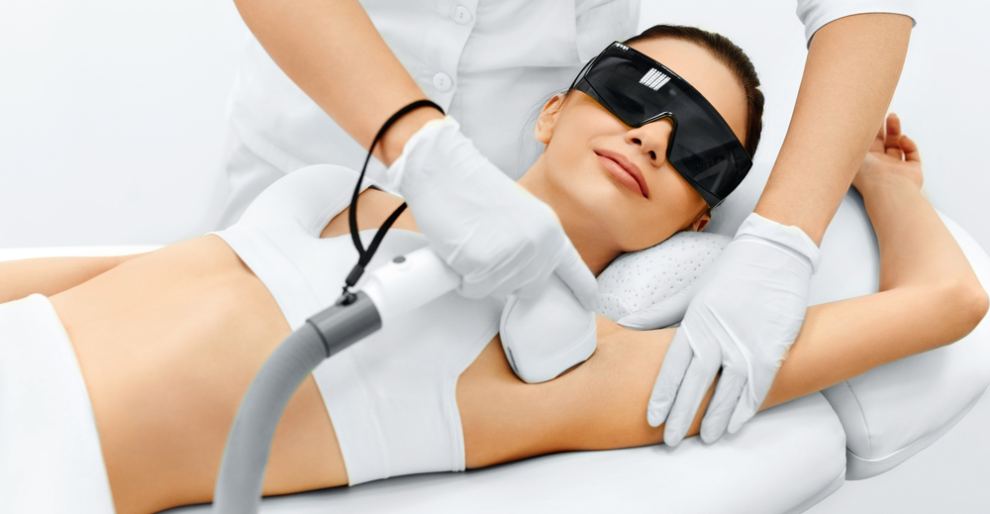
Metodele de epilare cu laser sau de tip IPL (intense pulsed light) au devenit din ce în ce mai populare, fiind disponibile atât în saloane și clinici specializate, precum și prin intermediul unor dispozitive destinate pentru a fi utilizate neprofesional, acasă. Deoarece îndepărtarea părului prin aceste tehnologii este considerată de lungă durată, epilarea cu laser sau de tip IPL este adesea numită definitivă.
A meta-analysis helps resolve conflicting evidence on the benefits of tACS.
Figuring out how to enhance a person’s mental capabilities has been of considerable interest to psychology and neuroscience researchers like me for decades. From improving attention in high-stakes environments, like air traffic management, to reviving memory in people with dementia, the ability to improve cognitive function can have far-reaching consequences. New research suggests that brain stimulation could help achieve the goal of boosting mental function.
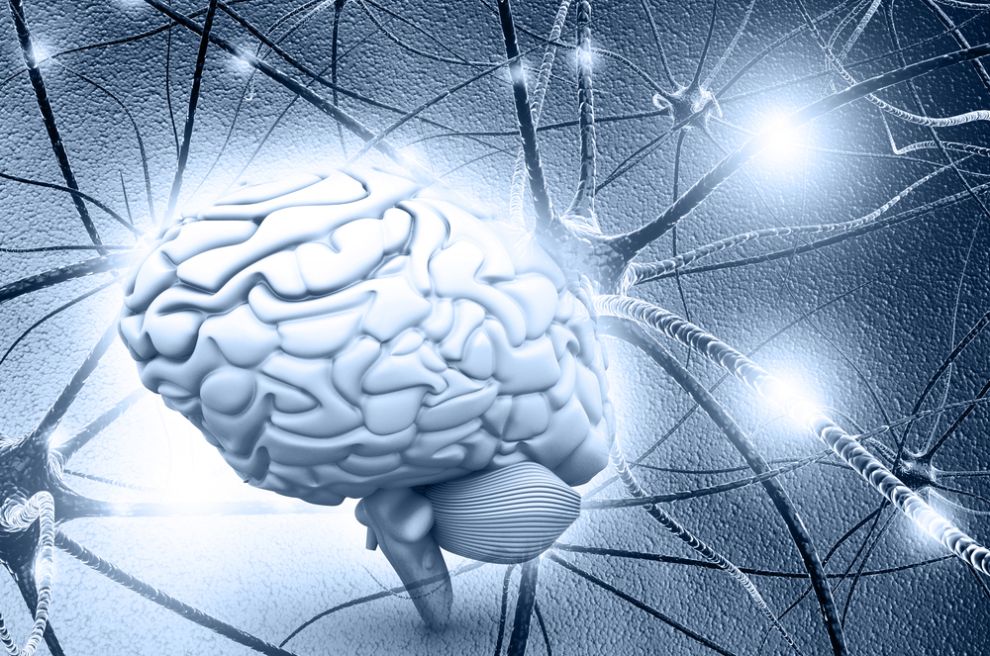
In the Reinhart Lab at Boston University, my colleagues and I have been examining the effects of an emerging brain stimulation technology – transcranial alternating current stimulation, or tACS – on different mental functions in patients and healthy people.
During this procedure, people wear an elastic cap embedded with electrodes that deliver weak electrical currents oscillating at specific frequencies to their scalp. By applying these controlled currents to specific brain regions, it is possible to alter brain activity by nudging neurons to fire rhythmically.
Despre subiectul infidelității am mai scris un articol în urmă cu câteva luni, în care am prezentat principalele motive ale infidelității.
Un studiu recent (poate fi citit integral, gratuit (eng.)), publicat în Archives of Sexual Behavior, vine cu câteva concluzii interesant, pe care le prezint, succint, mai jos:
People who want to do good in the world are vulnerable to an insidious form of mental manipulation. (Credit: Lorenzo Rossi/Alamy)
At a recent party, a stranger standing next to me spoke up suddenly when a snazzy ad for an electric vehicle appeared on the television. “EVs harm the environment way more than gas cars,” she announced to the room.
“Well, no,” I responded. “I have an EV, and it’s not even close. Gas cars are much worse for the environment.”
Then she moved closer to me, as if confiding a dark secret, and said, “By driving an EV, you are killing small children in Africa.” I’d done enough research to know her statement was false, yet it still felt like a punch to the gut. I second-guessed myself. Had I missed something? Was I causing harm without realizing it? All I could muster was a murmured, “No, no, that’s not true,” before backing away from the conversation.
• „Principele” de Nicolò Machiavelli(finalizată: 3☆/5) • „Zorii tuturor lucrurilor. O nouă istorie a omenirii”de D. Graeber și D. Wengrow(finalizată:5☆/5) •„Elefantul din creier” de Kevin Simler și Robin Hanson(fără note:3☆/5) •„Trebuie să-ți schimbi viața” de Peter Sloterdijk(fără note:4☆/5) •„Apeirogon” de Colum McCann(fără note:5☆/5)